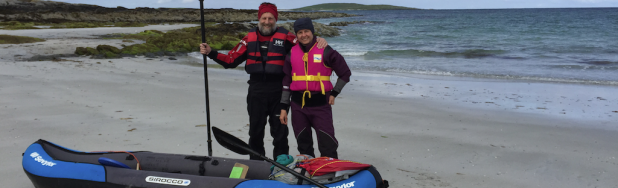
Para Lewis, o asesor do SNSI, Alastair McIntosh, inflar a súa canoa e levala a dar unha volta polas illas Hébridas non era unha historia de heroica actividade ao aire libre. Alistair, que leva moito tempo involucrado na lectura da alma das paisaxes e interesado nos entroncamentos máis profundos das persoas coa natureza, headed out for a pilgrimage to the sacred sites surrounding his homelands.
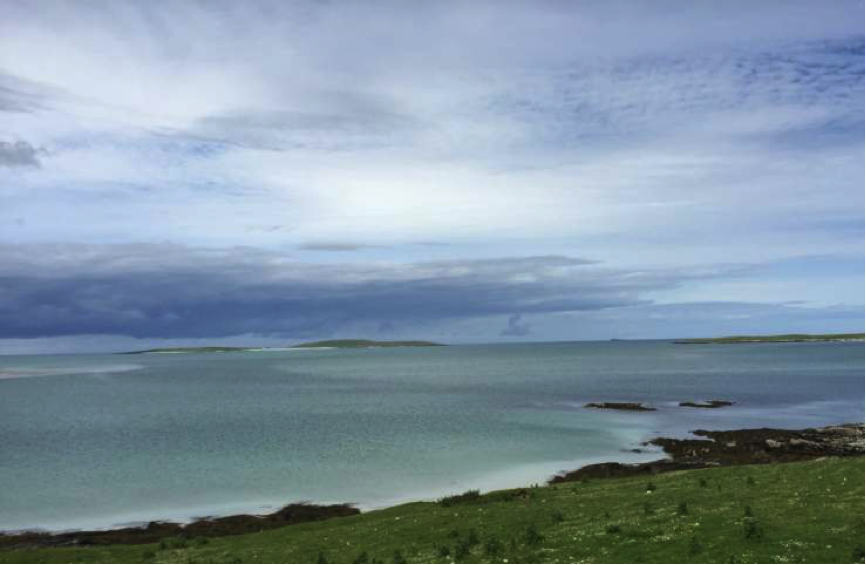
The Isle of Boreray, seen as two low humps with a beach in between when viewed from the spot on North Uist. Alatair and Verene paddled the 2 miles out from the point by Siabaigh, Isle of Berneray, jutting out on the right.Photo: Alastair McIntosh.
It was only logical he’d get there paddling, as the Outer Hebrides are the furthest west in Scotland as one can get. Needless to say, it’s not a densely populated place with public transport serving you to visit each of its corners. Surprisingly it wasn’t always like that. History tells us that during medieval times these islands acted as safe havens, trading posts and religious centres along a busy highway frequented by seafaring folk from Scandinavia and Europe.
The Isle of Boreray off North Uist and Berneray on the Western Isles has been the burial place of monks of the Celtic era, but its sacred history didn’t start there, and neither did it stop there. With each stroke of his paddle, Alastair with his wife venture deeper into the complex history of the Isles’ sacred places. He explores the origins of the early medieval incised cross, touches on burial mounds, curious rock features, prehistoric cup marks and abandoned settlements.
The inspiration for his trip came after working on his book entitled “Island Spirituality” in 2013. He was on a trip researching pilgrimage around the Hebrides and sitting in a taxi waiting for the ferry to cross over.
Two miles off North Uist is a tiny island that I’d yearned to visit ever since the local taxi driver pulled in, pointed it out, and solemnly said: “That is the island of Boreray, the birth place of the grandfather of Neil Armstrong, the first man on the moon.” I thought – “So, here’s a people who know a thing or two about pilgrimage” – and a fortnight ago, pilgrimage was indeed the spirit with which Vérène and I paddled out into the Atlantic.
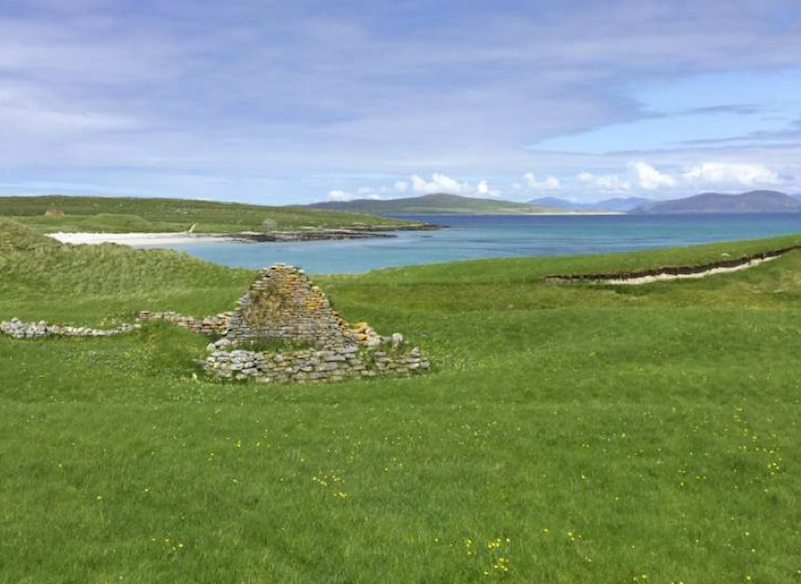
Cladh Manach, the Monk’s Field. All the monks that died in the islands that lie northward from Egg were buried in this little plot: each grave had a stone at both ends, some of which are three, and others four feet high. Foto: Alastair McIntosh.
What can be said, é que para moitas das illas ao norte de Eigg ata Harris, Boreray é un lugar moi céntrico. Un está alí rodeado de lugares que teñen asociacións antigas profundamente sagradas: pozos, templos (capelas anteriores á reforma) e topónimos. Para os interesados nesta historia intrigante e xeografía sagrada nas illas occidentais, ler Alastairs reportaxe fotográfica completa sobre a romaría en piragua.
Alastair McIntosh forma parte do grupo asesor da Iniciativa de Sitios Naturais Sagrados. É membro do Centro de Ecoloxía Humana e da Escola de Divinidade da Universidade de Edimburgo, e profesor visitante na Universidade de Glasgow. Entre os seus libros destaca Soil and Soul (Aurum 2001), Activismo espiritual: Liderado como servizo (acaba de publicarse por Green Books), e Romaría do furtivo: unha viaxe á illa, que se debe en 2016 de Berlín, and about a pilgrimage by foot through sacred natural sites in Scotland’s Outer Hebrides.