Сайт
This study compares two sacred natural sites in the Republic of Guinea Bissau. The coastal territories of Bijante (Bijagos archipelago) and Colage on the mainland coast vary geographically but are similar in terms of culture. Вони є, наприклад, both protected by the traditional custodians. Both contain mangroves and tropical forests. Local societies are characterized by high solidarity between the individuals who have their own freedoms, but respect the collective religious rights and requirements. Initiation rituals taking place in sacred forests or surrounding natural areas mark the passing of young people into new age classes. While Colage lies in the Cacheu national park, Bijante is part of the Bolama-Bijagos biosphere reserve, not legally protected.
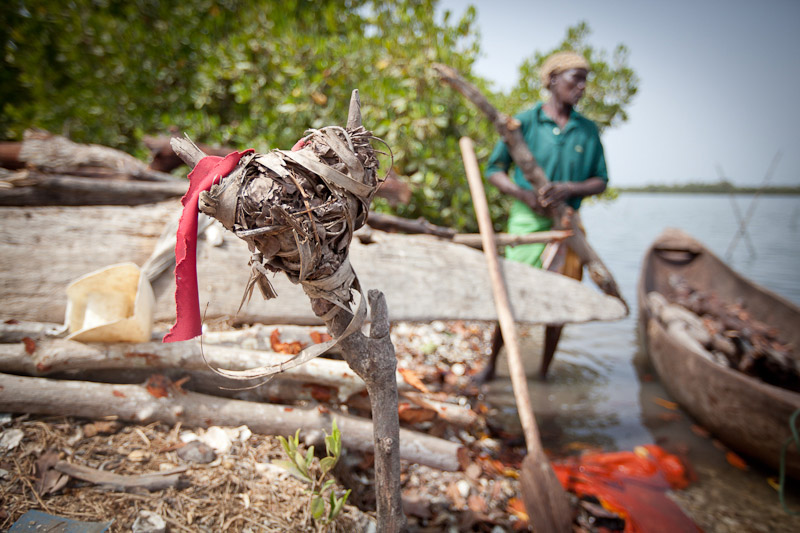 This fetish marks the border of a coastal or marine sacred site Kawawana. It is associated with taboos regarding access and resource use such as fishing, boating and in this case also the harvest of mangrove trees as you can see in the background.
 (Фото: courtesey of Julien Semelin.)
Хранителі
The local people of Colage are part of the Felupe, while the Bijante people are called Bijagos. Life in these areas is ruled by Elders following ancient habits and traditions. The most important social figures of the forest of Colage are the Amanhe (King) the Alamba (land owner), the Obiapulo (Master of ceremony) і Kassetin (Medicine man). The high priestess takes care of the sacred fire and of the sacred house of the spirits. разом, they teach the younger generations during ceremonies. These communities are very tightly linked to their natural surroundings through their culture and religious beliefs. All community members start making offerings at sacred natural sites at a young age.
King Oronhó rules the site of Bijante by carrying out religious, social and political tasks. He is subject to the local elder council. Besides several key figures being responsible for conserving sacred natural sites, the local belief is that the sacred woods conserve themselves. Some of them are only accessible by men, others just by women. These sites are governed through local myths and taboos about accessing or fishing in sacred natural sites. It is believed trespassing invokes sanctions of a mystical nature by the divinities.
Зір
Blanket recognition is being sought for all sacred natural sites in and outside protected areas. Empowerment of community action seems a logical step. Mapping unknown sacred natural sites could help placing them under juridical protection but it remains a challenge to specifically adjust current national laws to enable locally desirable conservation measures. For those sacred natural sites located in protected areas, management should ensure and support continuation of Sacred Natural Site oriented rituals with cultural or spiritual value as appropriate.
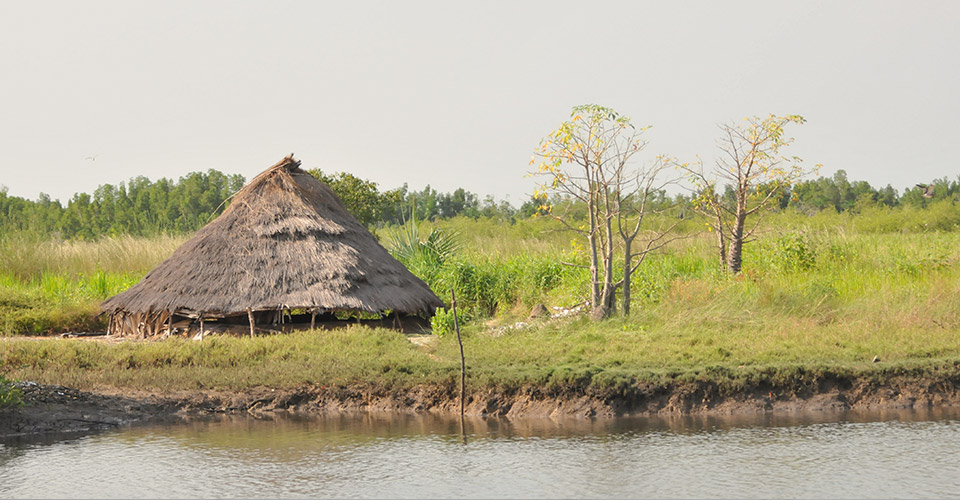
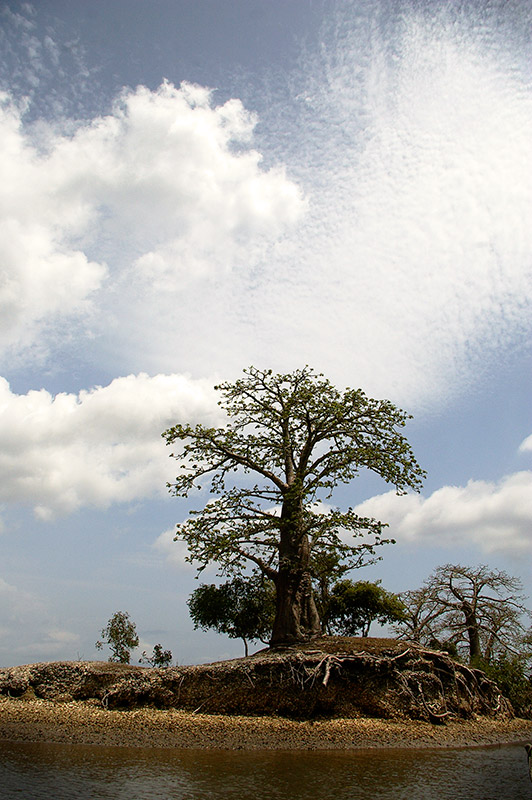 Amas Cocuillier Petit kassa: A sacred Baobab tree stands in the bend of a river. The baobab is a species of high cultural significance in Africa nut it also occurs in Australia. Baobab trees function as markers for meeting places but they are also important as places to communicated with the ancestors. (Фото: courtesey of Julien Semelin.)
Екологія і біорізноманіття
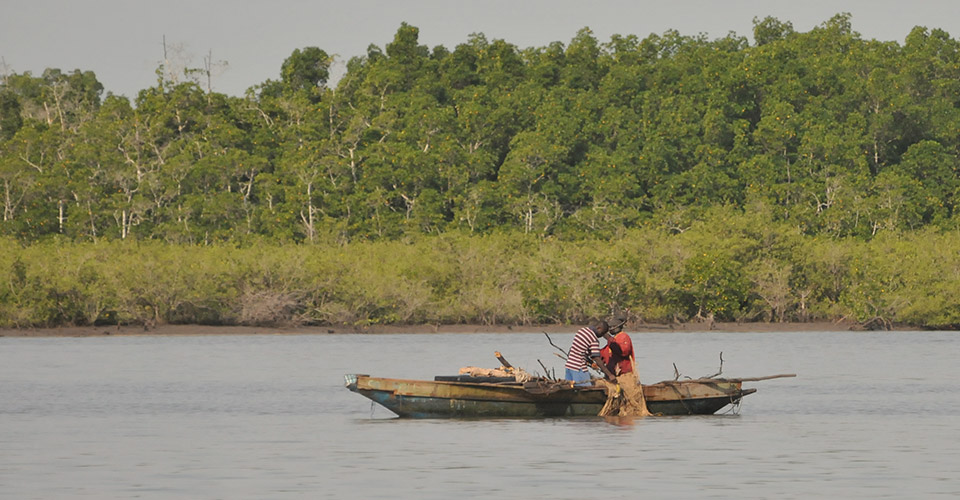
The region consists mainly of savannas, arid and semi arid forests, mangroves and rice cultures. The sacred mangroves (Rhizospora sp.) and forests (бавовняне дерево) in the region generally have a higher biodiversity than their surrounding sites, offering more edible and medicinal plants to the local communities. Animals in the region include the West African Manatee (Trichecus senegalensis), the Green Turtle (Chelonia mydas) and the Nile Crocodile (Crocodylus niloticus).
Загрози
Sea level rise threatens coastal sacred lands in the region and climate change may destabilize ecosystems. More imminent, however is the threat of modernization. External groups promote the belief that these regions are backward and underdeveloped and interrupt the transmission local knowledge. Confused and forced by poverty, young local people migrate to urban areas and elders sell out to powerful stakeholders who convert their lands into cashew nut plantations or areas for tourism development. Intensive fishing by outside Senegalese and Guinean fishermen threatens the marine resources and reduces the availability of fish to the local communities.
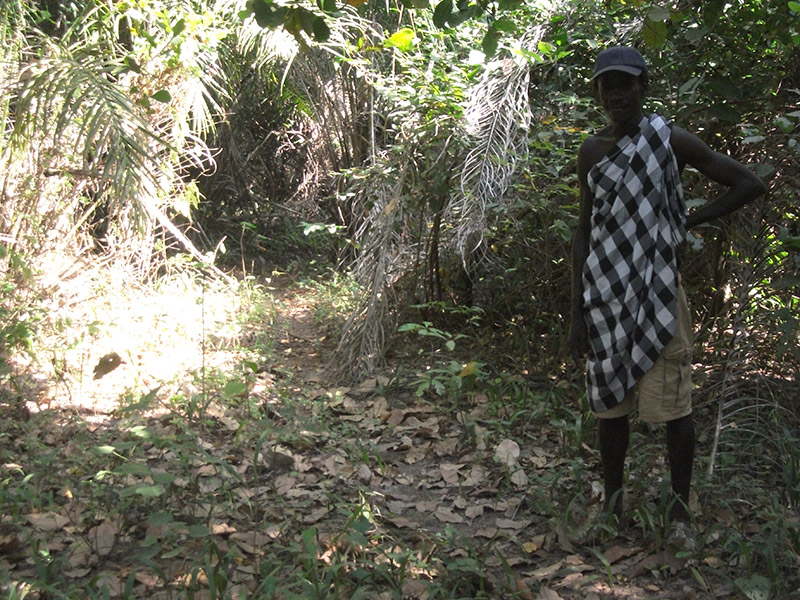 A custodian of "Colage" sacred natural site shows leads the way to the entrance of the grove where the site is located. Bijagóans are linked to the land through the rituals that follow them through life and death. Almost three quarters of all 88 islands in the archipelago are sacred areas for initiated members. (Фото: Lafiba.)
Коаліція
The FIBA (Fondation Internationale du Banc d’Arguin) supports research in the area. Both communities are situated within a larger territory officially managed by an administrator and a governor. В реальності, однак, the initiated community members of the region manage the sites by themselves, sometimes with financial support from the park or the biosphere reserve. The king, наприклад, marks the start of the agricultural seasons and the dates of the major ceremonies. Some environmental NGO’s are at work in the two regions, while the park facilitates schools and wells for the local population.
Дія
Conservation efforts in the region have so far focussed on regulating fisheries and protecting biodiversity in general rather than on sacred natural sites. Тоді як місцеві ініціативні люди вживають необхідних заходів для збереження священних лісів, науковці та керівники створили перші карти спільно з кураторами, із зазначенням розташування конкретних священних природних місць, таких як Біджанте та Колаж. Вчені та неурядові організації також підвищили обізнаність про місцеві проблеми та можливості для священних природних місць.
Збереження інструменти
Міжнародна тенденція до визнання цих сайтів пропонує гарну можливість для місцевого визнання їх важливості. Спільні карти локацій, статус і загрози священних природних об'єктів дають зрозуміти, що дозволяє політикам розробляти спеціальні закони для захисту таких об'єктів. Наукові дослідження також підвищують обізнаність про постійні загрози для священних природних місць і допомагають включити збереження цих місць у політичний порядок денний Гвінеї-Бісау.
Політики і права
Біджанте знаходиться в біосферному заповіднику Болама-Біягос, і Colage у мангровому природному парку річки Кашеу. Лише Colage захищено законом. Національний закон Гвінеї-Бісау про природоохоронні території визнає священні природні місця місцями релігійної практики. Якщо ці священні природні об'єкти розташовані в межах охоронюваних територій, їх природний стан не можна змінити. Доступ обмежено відповідно до правил місцевої громади. Закон про землеволодіння гарантує, що традиційні жителі мають право доступу до неї. A recent forest law enables recognition of community forests managed by the local people under supervision of the DGFF (Direction Genérale des Forêts et Faune/ General directorate for Forests and wildlife) prevents their sale. Hunting is forbidden in the region and fishing is only allowed for locals. Так далеко, the legal tools remain ineffective given their inadequate enforcement and their weak integration into other sectorial policy measures.
Результати
The preservation of sacred natural sites in their current state by local communities is important, but threats remain pertinent. Studies by FIBA support the first steps towards increasing awareness on the importance of sacred natural sites and the threats they face. Academic interest supports recognition of what would otherwise be thought of as savagery. New laws have emerged, but characteristics of the separate sacred natural sites should be specified for effective compliance.
 This fetish marks the border of a marine sacred site Kawawana. Sacred sites in marine areas are often associated with taboos regarding access and resource use such as fishing, boating and other activities.
 (Фото: courtesey of Julien Semelin.)
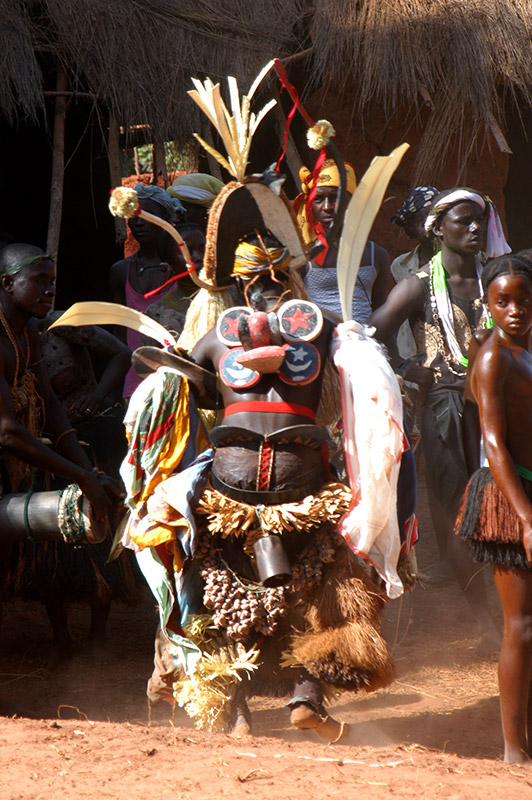 A traditional male Bijago dancer takes part in ceremony. Man and women dance separate and specific dances that offer an enactment of a sacred or spiritual dimension of life. As animist beliefs remain strong in the archipelago they are not at risk but instead aspects of them also become incorporated into Christianity and Islam. (Фото: Lafiba.)
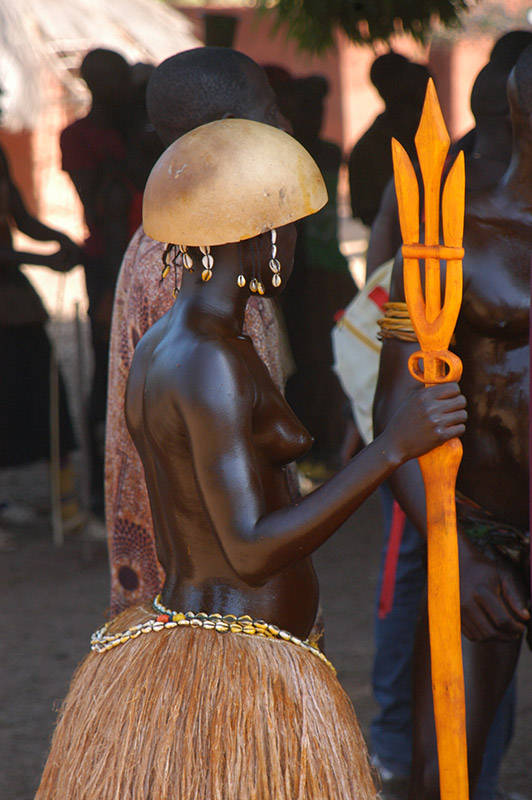 Bijagos Woman in Traditional ceremonial dress painted with a mixture of palm oil and red clay. In matriarchal Bijagos society woman have an elevated position over governance and decision making in the community. Because the Bijagos in an isolated archipelago many of their cultural traditions remain intact. (Фото: Lafiba.)
- Said A.R., Cardoso L., Indjai B. and Da Silva Nhaga H. (2011). Identification et caractérisation des sites naturels sacrés côtiers et marins en Afrique de l’Ouest. Rapport de la Guineée-Bissau.